AIAIO: Our Blog

AIAIO: Our Blog

The pulse of Alexander Interactive

Archive for the ‘Design’ Category

Picture perfect

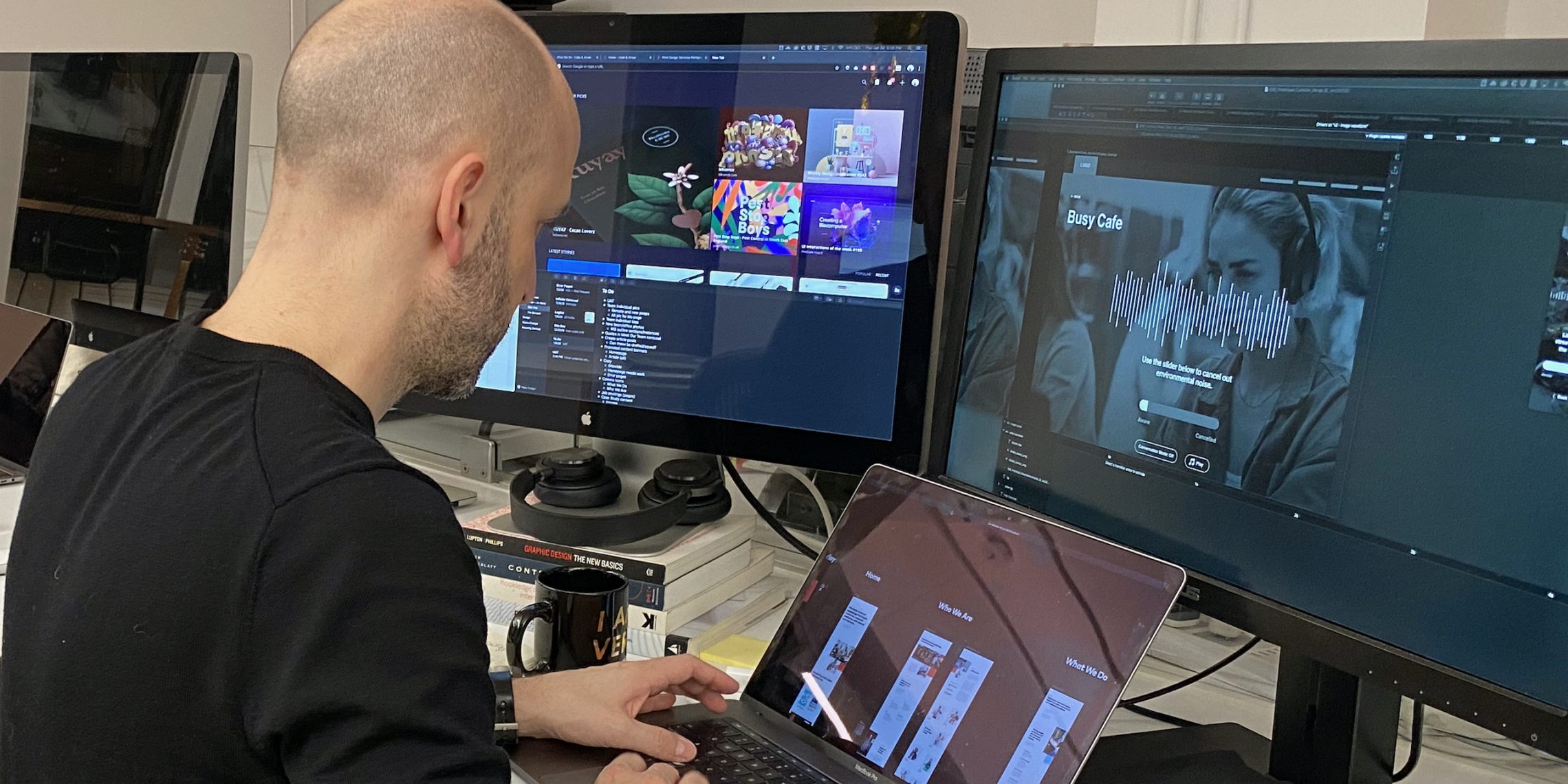
This morning we gave a first-round design presentation to a client. In order to accommodate all participants and scenarios, we used three computers, four screens, one projector, and a GoToMeeting remote setup, all to show a series of visuals.

Unsurprisingly, every screen looked different. The projector washed out lighter colors and gradients; the widescreen LCD’s robust color was dwarfed by the projected image; the folks watching via remote had a smaller screen area with a too-high “fold.”

All of which serves as a reminder that visual web design remains an incredibly difficult medium. Colors wash, screens change length, text rendering shifts, scripts and cookies disable: any number of challenges stand between a designer and the effective presentation of designs.

Ai’s developers pride themselves on pixel-perfect page outputs that stay true to our visual comps. But even perfect execution does not eliminate the vagaries of millions of users’ screen resolutions, color depths, and personal settings. The level of user control that we celebrate online also creates an incredible set of scenarios that, despite 15 years of advancement, still requires clever compromise and broad acceptance.

The nascent mobile revolution will only add to the complications surrounding online presentation. It’s a tough job, but fortunately a fascinating one.

Design

Accessibility design

Many members of our team love 1024-pixel designs. So do many of our clients. And why shouldn’t they: the real estate is vast, giving room for airy designs that fit lots of information above the fold. The results support their desires, too; our websites are uniformly handsome and easy to use.

Unfortunately, the average user doesn’t have the same 30″ cinema display as our creative director. (Alas, neither do I. But I digress.) Visitors to Ai’s sites are mostly in the 1024×768 camp, but narrow displays appear on a regular basis.

It can be easy to disregard these folks, to say, “Ah, well, the guy in Jersey with his screen set at 800×600 because he doesn’t like to squint, he can scroll to the right, lots of other sites make him do it.” What’s not so easy is to imagine the financial pain that could come from ignoring them. This forces us to be even more creative with our designs.

Thus our information architecture and graphic design teams ensure that all essential functions of the website appear within that 800px window, from major navigation links to add-to-cart and checkout buttons. Imagine the chaos, not to mention the customer service inquiries, if those smaller screens had to scroll right to hit “continue.” At Ai usability and accessibility are of prime importance.

In my days as design director at Economist.com, we set a tiny three percent limit on browser compliance. (This was back in the Netscape-versus-Internet Explorer days, as we debated dropping Navigator from our QA routine.) As I liked to cite to our tech and ad teams: “Three percent sounds like a small number. But 3% of a million is a pretty big number.”

These variables are what make web design difficult, and fascinating. Accommodating myriad screen widths, several popular browsers (currently IE, Firefox and Safari), two major operating systems, and layering on mobile constraints–consistency is nearly impossible. What’s important is a solid, confusion-free user experience that works regardless of a visitor’s variables.

One of my small contributions to Ai is championing the minority. Our websites already reflect the core values of universal user experience. The challenge is in pushing ourselves farther into universality with every site we make.

Design